Buy vt24.eu ?
We are moving the project
vt24.eu .
Are you interested in purchasing the domain
vt24.eu ?
domain@kv-gmbh.de · 0541-91531010
Buy vt24.eu ?
What does decentralization mean in urban development?
Decentralization in urban development refers to the distribution of power, resources, and decision-making processes away from a central authority to local governments, communities, or individuals. This approach aims to empower local stakeholders to have more control over their own development, leading to more sustainable and inclusive urban growth. Decentralization can help improve efficiency, accountability, and responsiveness in urban planning and management by involving a wider range of actors in the decision-making process. Ultimately, decentralization in urban development can lead to more resilient and vibrant cities that better meet the diverse needs of their residents. **
What is decentralization exactly?
Decentralization is the process of distributing power, decision-making authority, or resources away from a central authority or location to multiple smaller entities or individuals. It aims to empower local communities or individuals to have more control over their own affairs and reduce dependence on a central governing body. Decentralization can take various forms, such as political, administrative, or fiscal decentralization, and is often seen as a way to promote efficiency, accountability, and participation in governance. **

Similar search terms for Decentralization
Top-Angebote
Products related to Decentralization:
-
All Categories Goods LED Solar Security Light Dual Motion Sensor Outdoor Floodlight With LED Technology For Energy Efficient Illumination LED Solar Security Light Dual Motion Sensor Outdoor Floodlight With LED Technology For Energy Efficient IlluminationBrighten your outdoor space with the 1 pcs of 22 LED Solar Security Light, designed for maximum visibility and security. Powered by ecofriendly solar energy, this motion sensor floodlight activates when movement is detected, offering both...63,97 $*Shipping: 0,00 $Secure redirect to the provider




-
What exactly is decentralization?
Decentralization is the process of distributing power, decision-making authority, or resources away from a central authority to multiple smaller entities or individuals. It aims to promote autonomy, efficiency, and accountability by allowing for more localized control and decision-making. Decentralization can take various forms, such as political, administrative, or fiscal decentralization, and is often seen as a way to improve governance and service delivery. By dispersing power and responsibilities, decentralization can help to empower local communities and promote participatory decision-making. **
-
What is the history of decentralization?
Decentralization has been a concept that dates back to ancient civilizations such as the Greeks and Romans, who implemented systems to distribute power and decision-making across various levels of government. In more recent history, decentralization gained popularity as a way to promote local governance and autonomy, with examples such as the Magna Carta in 1215 and the formation of the United States with its federal system. In the 20th century, decentralization became a key principle in many countries' governance structures, aiming to improve efficiency, accountability, and responsiveness to local needs. Today, decentralization continues to be a prominent feature in many political systems worldwide, with varying degrees of implementation and success. **
-
What is the meaning of decentralization?
Decentralization refers to the distribution of power, authority, and decision-making to multiple levels or entities within a system, rather than concentrating it in a single central authority. This can apply to various aspects of governance, such as political, economic, or administrative systems. Decentralization is often seen as a way to promote local autonomy, increase efficiency, and foster innovation by allowing for more localized decision-making and problem-solving. It can also help to prevent the abuse of power and promote accountability by spreading authority across multiple levels. **
-
What is the difference between centralization and decentralization?
Centralization refers to the concentration of decision-making authority at the top levels of an organization, where key decisions are made by a few individuals or a single entity. On the other hand, decentralization involves the distribution of decision-making power to lower levels of an organization, allowing for more autonomy and flexibility in decision-making. Centralization can lead to quicker decision-making and consistency in operations, while decentralization can promote innovation, employee empowerment, and quicker responses to local issues. **


Does anyone know the definitions of democratization, demilitarization, denazification, decentralization, and dismantling?
Yes, I can provide brief definitions for each term. Democratization refers to the process of transitioning a government towards a more democratic system. Demilitarization involves reducing or eliminating military presence or capabilities in a certain area. Denazification is the process of removing Nazi influences and ideology from a society. Decentralization involves transferring power or decision-making authority from a central government to local or regional authorities. Dismantling refers to taking apart or disassembling a system or organization. **
Can someone please give me a few examples of how I can promote decentralization in children?
You can promote decentralization in children by giving them opportunities to make their own decisions, such as allowing them to choose their own activities or make choices about their daily routines. Encouraging them to express their own opinions and ideas, and actively listening to their perspectives, can also help promote decentralization. Additionally, involving children in problem-solving and decision-making processes within the family or classroom can empower them to take ownership of their choices and actions. **
Top-Angebote
Products related to Decentralization:
-
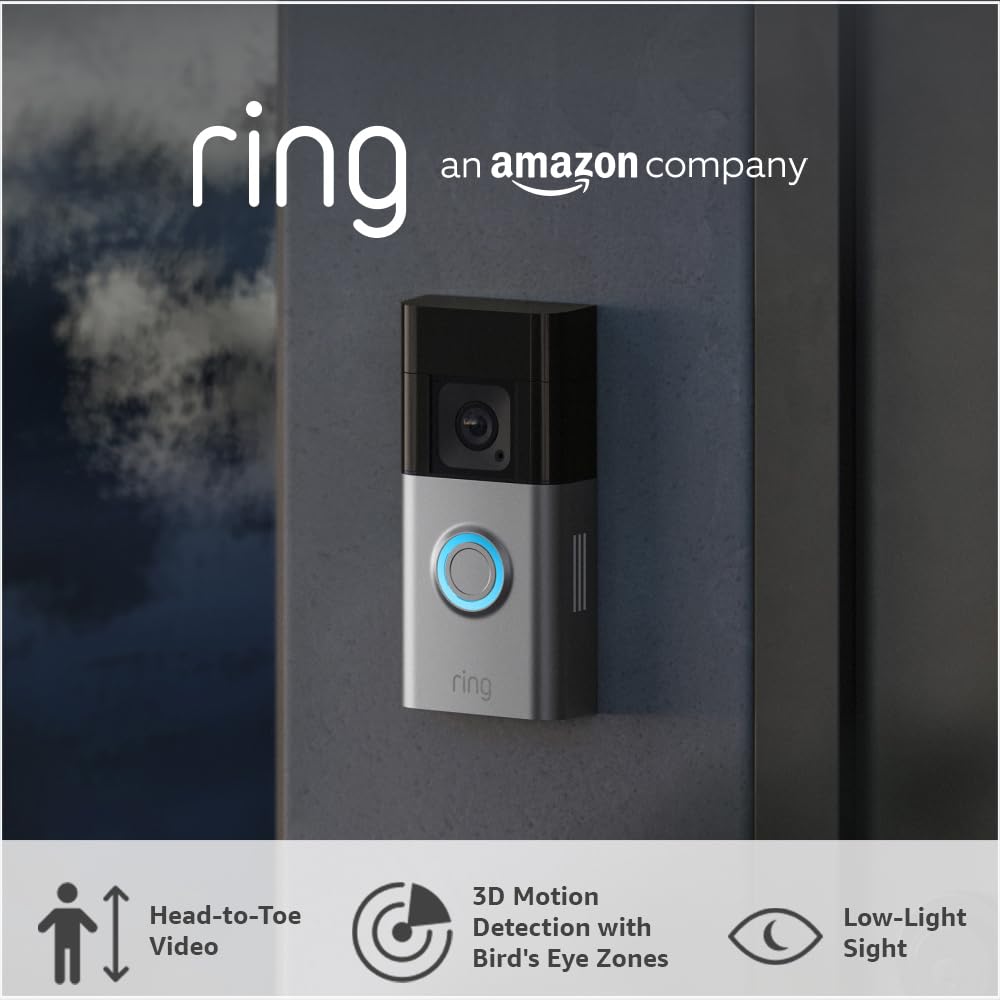
Ring Battery Video Doorbell Pro – Advanced Home Security & Connectivity, NewUpgrade your home security with the Ring Battery Video Doorbell Pro – Wireless Video Doorbell Security Camera . Designed to give you peace of mind, it delivers a head-to-toe 1536p HD view so you can see every detail clearly, from visitors to parcels at your doorstep. With advanced 3D Motion Detection and Bird’s Eye View , you’ll always know what’s happening around your home. The built-in colour night vision ensures crisp images even in the dark, while the wire-free battery design makes installation simple and flexible. Stay connected anywhere with instant notifications, two-way talk, and full integration with the Ring app, Alexa devices, and more. ✔️ Wireless video doorbell – Easy to install with a rechargeable battery, no wiring needed ✔️ 1536p HD head-to-toe view – See visitors and packages clearly in high definition ✔️ 3D Motion Detection & Bird’s Eye View – Advanced alerts and aerial perspective for extra security ✔️ Colour night vision – Crystal-clear video even in low light or darkness ✔️ Two-way talk with noise cancellation – Hear and speak to visitors in real time ✔️ Customisable motion zones – Focus on the areas that matter most ✔️ Smart alerts & notifications – Instant updates on your phone via the Ring app ✔️ Alexa compatible – Works seamlessly with Echo devices for hands-free monitoring ✔️ Quick-release battery pack – Easy to recharge and swap for uninterrupted security ✔️ Durable design – Built to withstand outdoor weather conditions The Ring Battery Video Doorbell Pro combines advanced motion detection, high-definition video, and smart home integration in one sleek device. Perfect for enhancing your home security, it ensures you never miss a visitor or delivery, day or night.174,49 £*Shipping: 0,00 £Secure redirect to the provider
-
Modulus: Factory Automation PC Steam CD KeyModulus: Factory Automation – PC Buy Cheap Modulus: Factory Automation PC Game Overview Modulus: Factory Automation is a deep, systems‑driven automation and production simulator where you design, build, and optimize fully automated factories. Extract resources, research new technologies, create efficient production chains, and scale your industrial empire from a small workshop to a massive automated complex. With modular building, conveyor systems, logistics planning, and advanced automation tools, Modulus offers a satisfying blend of engineering, strategy, and creative problem‑solving — perfect for fans of factory‑building and optimization games. This PC version includes global activation and instant digital delivery. Key Features Modular Factory Building Design production lines using modular components, machines, and conveyor systems. Deep Automation Systems Automate everything from resource extraction to high‑tier manufacturing. Research & Technology Tree Unlock new machines, upgrades, and advanced automation tools. Resource Management Balance inputs, outputs, power usage, and logistics to keep production flowing. Scalable Complexity Start small and expand into a massive, fully automated industrial network. Optimization Gameplay Refine layouts, reduce bottlenecks, and maximize efficiency. PC Enhanced Smooth performance, clean UI, and full Steam integration. Who This Game Is For Perfect for players who: Enjoy factory‑building and automation games Like optimization, logistics, and production‑chain design Want a deep, scalable simulation experience Appreciate modular building systems Enjoy games like Factorio, Satisfactory, or Dyson Sphere Program Platform Details Platform: PC Region: Global Edition: Digital Activation Code Genre: Automation, Simulation, Strategy, Management How to Activate (PC) Log in to your Steam account. Click Add a Game → Activate a Product on Steam . Enter your Modulus: Factory Automation PC code. Download and start playing instantly.31,65 £*Shipping: 0,00 £Secure redirect to the provider
-
All Categories Goods LED Solar Security Light Dual Motion Sensor Outdoor Floodlight With LED Technology For Energy Efficient Illumination LED Solar Security Light Dual Motion Sensor Outdoor Floodlight With LED Technology For Energy Efficient IlluminationBrighten your outdoor space with the 1 pcs of 22 LED Solar Security Light, designed for maximum visibility and security. Powered by ecofriendly solar energy, this motion sensor floodlight activates when movement is detected, offering both...63,97 $*Shipping: 0,00 $Secure redirect to the provider
-
What does decentralization mean in urban development?
Decentralization in urban development refers to the distribution of power, resources, and decision-making processes away from a central authority to local governments, communities, or individuals. This approach aims to empower local stakeholders to have more control over their own development, leading to more sustainable and inclusive urban growth. Decentralization can help improve efficiency, accountability, and responsiveness in urban planning and management by involving a wider range of actors in the decision-making process. Ultimately, decentralization in urban development can lead to more resilient and vibrant cities that better meet the diverse needs of their residents. **
-
What is decentralization exactly?
Decentralization is the process of distributing power, decision-making authority, or resources away from a central authority or location to multiple smaller entities or individuals. It aims to empower local communities or individuals to have more control over their own affairs and reduce dependence on a central governing body. Decentralization can take various forms, such as political, administrative, or fiscal decentralization, and is often seen as a way to promote efficiency, accountability, and participation in governance. **
-
What exactly is decentralization?
Decentralization is the process of distributing power, decision-making authority, or resources away from a central authority to multiple smaller entities or individuals. It aims to promote autonomy, efficiency, and accountability by allowing for more localized control and decision-making. Decentralization can take various forms, such as political, administrative, or fiscal decentralization, and is often seen as a way to improve governance and service delivery. By dispersing power and responsibilities, decentralization can help to empower local communities and promote participatory decision-making. **
-
What is the history of decentralization?
Decentralization has been a concept that dates back to ancient civilizations such as the Greeks and Romans, who implemented systems to distribute power and decision-making across various levels of government. In more recent history, decentralization gained popularity as a way to promote local governance and autonomy, with examples such as the Magna Carta in 1215 and the formation of the United States with its federal system. In the 20th century, decentralization became a key principle in many countries' governance structures, aiming to improve efficiency, accountability, and responsiveness to local needs. Today, decentralization continues to be a prominent feature in many political systems worldwide, with varying degrees of implementation and success. **
Similar search terms for Decentralization
-
DEVERA Hanger and Full-length Mirror IntegrationSpecification Main Material: Rubber Wood,Solid Wood,Wood+Glass Product Style: American Design,Artsy,Beach,Contemporary,European Product Features Product Information: Full-length mirror, solid wood + rubber wood + glass, 68.8*19.6in (mirror width:...349,99 $*Shipping: 0,00 $Secure redirect to the provider
-
Sesderma Reti Age 5 Liposomal Serum Anti-Aging Innovation 30mLA facial serum for wrinkles and signs of ageing. Reduces wrinkles and fine lines. Hydrates and strengthens barrier. Restores youthful radiance. 5-Retinoid System: smooths wrinkles, accelerates renewal, and boosts collagen. Biomimetic Peptides: fill expression lines by stimulating collagen synthesis.41,69 £*Shipping: 5,34 £Secure redirect to the provider
-
What is the meaning of decentralization?
Decentralization refers to the distribution of power, authority, and decision-making to multiple levels or entities within a system, rather than concentrating it in a single central authority. This can apply to various aspects of governance, such as political, economic, or administrative systems. Decentralization is often seen as a way to promote local autonomy, increase efficiency, and foster innovation by allowing for more localized decision-making and problem-solving. It can also help to prevent the abuse of power and promote accountability by spreading authority across multiple levels. **
-
What is the difference between centralization and decentralization?
Centralization refers to the concentration of decision-making authority at the top levels of an organization, where key decisions are made by a few individuals or a single entity. On the other hand, decentralization involves the distribution of decision-making power to lower levels of an organization, allowing for more autonomy and flexibility in decision-making. Centralization can lead to quicker decision-making and consistency in operations, while decentralization can promote innovation, employee empowerment, and quicker responses to local issues. **
-
Does anyone know the definitions of democratization, demilitarization, denazification, decentralization, and dismantling?
Yes, I can provide brief definitions for each term. Democratization refers to the process of transitioning a government towards a more democratic system. Demilitarization involves reducing or eliminating military presence or capabilities in a certain area. Denazification is the process of removing Nazi influences and ideology from a society. Decentralization involves transferring power or decision-making authority from a central government to local or regional authorities. Dismantling refers to taking apart or disassembling a system or organization. **
-
Can someone please give me a few examples of how I can promote decentralization in children?
You can promote decentralization in children by giving them opportunities to make their own decisions, such as allowing them to choose their own activities or make choices about their daily routines. Encouraging them to express their own opinions and ideas, and actively listening to their perspectives, can also help promote decentralization. Additionally, involving children in problem-solving and decision-making processes within the family or classroom can empower them to take ownership of their choices and actions. **
* All prices are inclusive of VAT and, if applicable, plus shipping costs. The offer information is based on the details provided by the respective shop and is updated through automated processes. Real-time updates do not occur, so deviations can occur in individual cases. ** Note: Parts of this content were created by AI.