Buy vt24.eu ?
We are moving the project
vt24.eu .
Are you interested in purchasing the domain
vt24.eu ?
domain@kv-gmbh.de · 0541-91531010
Buy vt24.eu ?
How do I expand parentheses and handle the negative sign inside the parentheses?
To expand parentheses and handle the negative sign inside, you can distribute the negative sign to each term inside the parentheses. This means that you will change the sign of each term inside the parentheses. For example, if you have -(3x + 4), you would distribute the negative sign to get -3x - 4. This is done by changing the positive terms inside the parentheses to negative and the negative terms to positive. **
How do you open parentheses?
To open parentheses, you simply press the key that has the "(" symbol on it. On most keyboards, this key is located to the right of the "P" key. If you are using a mobile device, you can usually find the parentheses symbol by switching to the symbols or numbers keyboard. **

Similar search terms for Parentheses
Top-Angebote
Products related to Parentheses:
-
How do you change parentheses?
To change parentheses, you can simply replace them with different types of parentheses or remove them altogether. For example, you can change round parentheses ( ) to square brackets [ ] or curly braces { }. You can also change the placement of parentheses to alter the grouping of elements in a mathematical expression or sentence. Additionally, you can add or remove parentheses to clarify the meaning of a statement or to improve readability. **
-
How do you use parentheses?
Parentheses are used to provide additional information or clarification within a sentence. They can contain extra details, examples, or explanations that are not essential to the main point of the sentence. It is important to remember that the sentence should still make sense if the information inside the parentheses is removed. Additionally, parentheses can also be used to enclose citations, dates, or mathematical equations within a sentence. **
-
How do you calculate parentheses?
To calculate parentheses, you follow the order of operations, which is PEMDAS: Parentheses, Exponents, Multiplication and Division (from left to right), and Addition and Subtraction (from left to right). Start by solving the operations inside the parentheses first, then work your way outwards following the order of operations. If there are nested parentheses, solve the innermost set first and then move outward. This ensures that you calculate the expressions within the parentheses before combining them with the rest of the equation. **
-
How do you correctly read parentheses?
To correctly read parentheses, you should start by evaluating the expression inside the innermost set of parentheses first. Then, work your way outwards, following the order of operations (parentheses, exponents, multiplication and division, addition and subtraction). It is important to remember that parentheses are used to group parts of an expression together, indicating that those parts should be evaluated as a single unit. By following these steps, you can ensure that you read parentheses correctly and accurately evaluate mathematical expressions. **
How do you write without parentheses?
To write without parentheses, you can use alternative punctuation or sentence structures to convey the same information. For example, you can use commas, dashes, or brackets to set off additional information within a sentence. You can also rephrase the sentence to separate the additional information into its own sentence or use a footnote to provide extra context. Overall, the key is to be clear and concise in conveying the intended meaning without relying on parentheses. **
How do you read parentheses correctly?
To read parentheses correctly, you should start by looking for the opening parenthesis "(" and then find the corresponding closing parenthesis ")". The content within the parentheses is typically read as a separate unit from the rest of the sentence. It is important to remember that the information within the parentheses is usually additional or clarifying, but not essential to the main sentence. Reading the sentence without the content within the parentheses should still make sense. **
Top-Angebote
Products related to Parentheses:
-
Ring Battery Video Doorbell Pro – Advanced Home Security & Connectivity, NewUpgrade your home security with the Ring Battery Video Doorbell Pro – Wireless Video Doorbell Security Camera . Designed to give you peace of mind, it delivers a head-to-toe 1536p HD view so you can see every detail clearly, from visitors to parcels at your doorstep. With advanced 3D Motion Detection and Bird’s Eye View , you’ll always know what’s happening around your home. The built-in colour night vision ensures crisp images even in the dark, while the wire-free battery design makes installation simple and flexible. Stay connected anywhere with instant notifications, two-way talk, and full integration with the Ring app, Alexa devices, and more. ✔️ Wireless video doorbell – Easy to install with a rechargeable battery, no wiring needed ✔️ 1536p HD head-to-toe view – See visitors and packages clearly in high definition ✔️ 3D Motion Detection & Bird’s Eye View – Advanced alerts and aerial perspective for extra security ✔️ Colour night vision – Crystal-clear video even in low light or darkness ✔️ Two-way talk with noise cancellation – Hear and speak to visitors in real time ✔️ Customisable motion zones – Focus on the areas that matter most ✔️ Smart alerts & notifications – Instant updates on your phone via the Ring app ✔️ Alexa compatible – Works seamlessly with Echo devices for hands-free monitoring ✔️ Quick-release battery pack – Easy to recharge and swap for uninterrupted security ✔️ Durable design – Built to withstand outdoor weather conditions The Ring Battery Video Doorbell Pro combines advanced motion detection, high-definition video, and smart home integration in one sleek device. Perfect for enhancing your home security, it ensures you never miss a visitor or delivery, day or night.174,49 £*Shipping: 0,00 £Secure redirect to the provider
-
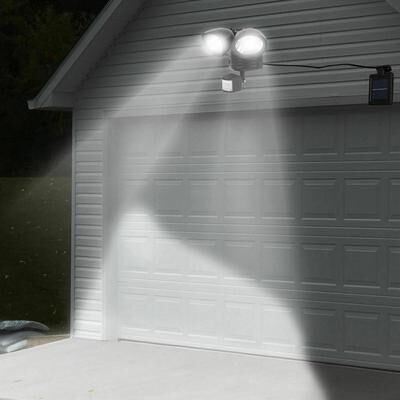
All Categories Goods LED Solar Security Light Dual Motion Sensor Outdoor Floodlight With LED Technology For Energy Efficient Illumination LED Solar Security Light Dual Motion Sensor Outdoor Floodlight With LED Technology For Energy Efficient IlluminationBrighten your outdoor space with the 1 pcs of 22 LED Solar Security Light, designed for maximum visibility and security. Powered by ecofriendly solar energy, this motion sensor floodlight activates when movement is detected, offering both...63,97 $*Shipping: 0,00 $Secure redirect to the provider
-
How do I expand parentheses and handle the negative sign inside the parentheses?
To expand parentheses and handle the negative sign inside, you can distribute the negative sign to each term inside the parentheses. This means that you will change the sign of each term inside the parentheses. For example, if you have -(3x + 4), you would distribute the negative sign to get -3x - 4. This is done by changing the positive terms inside the parentheses to negative and the negative terms to positive. **
-
How do you open parentheses?
To open parentheses, you simply press the key that has the "(" symbol on it. On most keyboards, this key is located to the right of the "P" key. If you are using a mobile device, you can usually find the parentheses symbol by switching to the symbols or numbers keyboard. **
-
How do you change parentheses?
To change parentheses, you can simply replace them with different types of parentheses or remove them altogether. For example, you can change round parentheses ( ) to square brackets [ ] or curly braces { }. You can also change the placement of parentheses to alter the grouping of elements in a mathematical expression or sentence. Additionally, you can add or remove parentheses to clarify the meaning of a statement or to improve readability. **
-
How do you use parentheses?
Parentheses are used to provide additional information or clarification within a sentence. They can contain extra details, examples, or explanations that are not essential to the main point of the sentence. It is important to remember that the sentence should still make sense if the information inside the parentheses is removed. Additionally, parentheses can also be used to enclose citations, dates, or mathematical equations within a sentence. **
Similar search terms for Parentheses
-
How do you calculate parentheses?
To calculate parentheses, you follow the order of operations, which is PEMDAS: Parentheses, Exponents, Multiplication and Division (from left to right), and Addition and Subtraction (from left to right). Start by solving the operations inside the parentheses first, then work your way outwards following the order of operations. If there are nested parentheses, solve the innermost set first and then move outward. This ensures that you calculate the expressions within the parentheses before combining them with the rest of the equation. **
-
How do you correctly read parentheses?
To correctly read parentheses, you should start by evaluating the expression inside the innermost set of parentheses first. Then, work your way outwards, following the order of operations (parentheses, exponents, multiplication and division, addition and subtraction). It is important to remember that parentheses are used to group parts of an expression together, indicating that those parts should be evaluated as a single unit. By following these steps, you can ensure that you read parentheses correctly and accurately evaluate mathematical expressions. **
-
How do you write without parentheses?
To write without parentheses, you can use alternative punctuation or sentence structures to convey the same information. For example, you can use commas, dashes, or brackets to set off additional information within a sentence. You can also rephrase the sentence to separate the additional information into its own sentence or use a footnote to provide extra context. Overall, the key is to be clear and concise in conveying the intended meaning without relying on parentheses. **
-
How do you read parentheses correctly?
To read parentheses correctly, you should start by looking for the opening parenthesis "(" and then find the corresponding closing parenthesis ")". The content within the parentheses is typically read as a separate unit from the rest of the sentence. It is important to remember that the information within the parentheses is usually additional or clarifying, but not essential to the main sentence. Reading the sentence without the content within the parentheses should still make sense. **
* All prices are inclusive of VAT and, if applicable, plus shipping costs. The offer information is based on the details provided by the respective shop and is updated through automated processes. Real-time updates do not occur, so deviations can occur in individual cases. ** Note: Parts of this content were created by AI.